Source Skeleton Bucket for Excavators in Mining and River Work
Compare 30 skeleton bucket options for excavators used in mining, river cleaning, and marine applications. Buyers can review specifications like capacity, material, and customization availability from suppliers in China.
Key considerations
Products List


Skeleton Bucket for 20tons Excavator
$1500.00 - $2000.00
Moq: 1
Xuzhou Shenfu Construction Machinery and Equipment Co., Ltd.

Skeleton Bucket for 3t Excavator
$1500.00 - $2000.00
Moq: 1
Xuzhou Shenfu Construction Machinery and Equipment Co., Ltd.

Skeleton Bucket for 20t Excavator
$1500.00 - $2000.00
Moq: 1
Xuzhou Shenfu Construction Machinery and Equipment Co., Ltd.

Hot Sale 20t Excavator Skeleton Bucket
$1500.00 - $2000.00
Moq: 1
Xuzhou Shenfu Construction Machinery and Equipment Co., Ltd.




Comprehensive Sourcing Guide
Strategic Sourcing Guide for Skeleton Buckets in Heavy Equipment Procurement
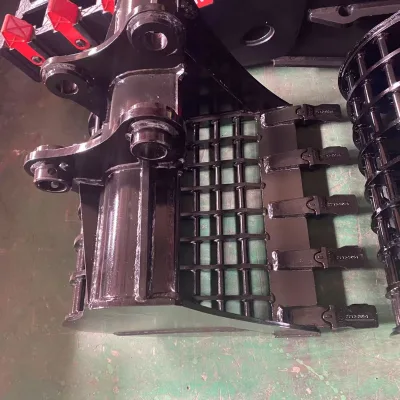
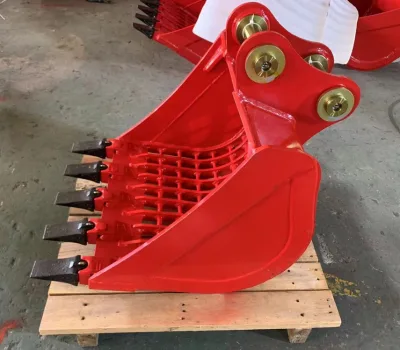
Sourcing a skeleton bucket, often referred to as a screening or grizzly bucket, requires a nuanced understanding of heavy equipment compatibility, material science, and operational efficiency. Unlike standard digging buckets designed for maximum volume retention, skeleton buckets are engineered to separate materials on-site, allowing fine soil and debris to fall through while retaining larger rocks, logs, or debris. This specialized function makes them critical for applications in land clearing, recycling, mining, and river cleaning. The procurement process for these components involves rigorous verification of technical specifications, certification compliance, and supplier reliability to ensure that the equipment performs under the demanding conditions typical of construction and industrial sites.
Technical Specifications and Compatibility Verification
The primary technical challenge in sourcing a skeleton bucket lies in matching the unit to the specific excavator model and operational requirements. The supplied data indicates a diverse range of models, including specific identifiers such as RSSB, RSBM, SKB-20, and SKB-25, alongside generic references like "Skeleton Bucket for 3T Excavator" and "20T excavator." This variance highlights the necessity for buyers to verify the exact compatibility with their existing fleet before placing an order. The standard capacity ranges observed in the market data span from 0.08m³ to 1.4m³, with specific instances noted at 1.1m³ and 20T-100T load capacities. These figures suggest that skeleton buckets are available for a wide spectrum of machine sizes, from compact 3-ton units to heavy-duty 20-ton excavators.
Material composition is another critical technical factor. The provided facts specify the use of Hq60 and Q345 steel, with some listings noting Hq60+Q345b. These are high-strength, low-alloy steels known for their durability and resistance to wear and tear, which is essential for the abrasive environment of mining and land clearing. The drive type is consistently listed as internal combustion drive, and transmission types vary between hydraulic and mechanical, indicating that the bucket's integration with the excavator's hydraulic system must be confirmed. Furthermore, the bucket teeth are noted as "with," implying that the inclusion of teeth is a standard feature for enhanced digging capability, though the specific configuration should be verified. Buyers must ensure that the bucket's mounting points, hydraulic flow requirements, and physical dimensions align precisely with the excavator's specifications to prevent operational failures or safety hazards.
Compliance, Certification, and Quality Standards
In the B2B procurement of heavy machinery components, compliance with international standards is non-negotiable. The observed data lists several certifications, including CE, ISO9001:2015, and SGS. These certifications serve as third-party validations of the manufacturer's quality management systems and product safety. The presence of CE marking indicates conformity with health, safety, and environmental protection standards for products sold within the European Economic Area, while ISO9001:2015 confirms that the supplier adheres to a globally recognized quality management framework.
However, buyers must exercise caution when interpreting these certifications. The data shows variations, such as "Certification: CE, ISO9001: Condition: New" and "Certification_ISO9001: 2015/SGS." It is imperative to verify the validity of these certificates for the specific batch of products being purchased, as certification status can vary between different product lines or manufacturing batches. The standard production origin locations identified are Xuzhou, Jining in Shandong Province, and Jiangsu Province, China. While these regions are known for heavy equipment manufacturing, the specific factory location should be cross-referenced with the certification documents to ensure the product originates from a facility that maintains the claimed standards. Additionally, the "Standard Export Wooden Pallet" packing method suggests adherence to international shipping standards, which helps protect the product during transit and reduces the risk of damage before arrival.
Cost Drivers and Pricing Dynamics
The pricing landscape for skeleton buckets is highly variable, with observed listed prices ranging from 20 USD to 8000 USD. This wide disparity is driven by several factors, including the bucket's capacity, material thickness, customization level, and the specific excavator tonnage it supports. A bucket designed for a 3-ton excavator will naturally cost significantly less than a unit rated for a 20-ton machine. The material cost is a primary driver, given the use of high-grade Hq60 and Q345 steels. Customization options, such as specific sizes, colors (yellow, red, or others), and volume adjustments, also influence the final price.
Minimum Order Quantity (MOQ) is another critical cost factor. The data indicates an MOQ range of 1 to 5 pieces, with specific mentions of "1 Piece" and "1-5" units. This flexibility allows small contractors to purchase single units, while larger operations can leverage bulk ordering for potential discounts. However, buyers should be aware that the lowest price points in the 20-8000 USD range may correspond to smaller capacities or less customized units. Conversely, the higher end of the spectrum likely reflects heavy-duty, fully customized solutions with extended warranties or specialized features. It is essential to request detailed quotes that break down costs based on capacity, material grade, and customization to avoid hidden fees or misunderstandings regarding the final price.
Typical Applications and Operational Use Cases
Skeleton buckets are specialized tools designed for specific operational environments where material separation is required. The data highlights several key usage scenarios, including "Clean River," "Mining Excavator," "GM Excavator," "Marine Excavator," and "Special Excavator." In mining applications, these buckets are used to separate valuable ore from waste rock, improving processing efficiency. For land clearing and recycling, they allow operators to screen soil and debris, removing large rocks and logs while allowing finer material to pass through, which is crucial for site preparation and landscaping.
The "Clean River" application suggests use in environmental remediation or dredging projects where separating sediment from larger debris is necessary. The versatility of the skeleton bucket is further emphasized by the "Size Can Be Customized" and "Volume: Can Be Customized" attributes, allowing manufacturers to tailor the bucket to unique project requirements. Whether used in marine environments or general construction, the bucket must withstand high-impact loads and abrasive conditions. Buyers should assess their specific operational needs against the bucket's capacity and design to ensure it meets the demands of their particular application.
Supplier Evaluation and Geographic Considerations
When evaluating suppliers, the geographic origin of the product plays a significant role in logistics and lead times. The data identifies Xuzhou, Jining (Shandong), and Jiangsu Province as key manufacturing hubs. These regions in China have established supply chains for heavy equipment components, offering a competitive advantage in terms of production capacity and cost. However, buyers must verify the specific factory location to ensure it matches the claimed origin. The lead time for delivery is observed to be between 5 and 15 days, which is relatively short and indicates a responsive supply chain.
Supplier reliability is further assessed through the availability of customization services. The "Customization: Available" attribute suggests that suppliers are willing to adapt products to meet specific buyer requirements. This flexibility is a positive indicator of a supplier's capability to handle complex orders. Additionally, the "Brand: Th or Customised" note implies that buyers can choose between branded products or private labeling, which is beneficial for companies looking to build their own brand identity. When selecting a supplier, buyers should prioritize those with a proven track record of delivering certified products, maintaining consistent quality, and providing clear communication regarding customization and delivery timelines.
Quality Control and Long-Term Procurement Considerations
Ensuring long-term value from skeleton bucket procurement requires a robust quality control strategy. The "Guarantee: 6 Months" warranty mentioned in the data provides a baseline for product reliability, but buyers should seek extended warranty options or service agreements for high-volume operations. The use of high-quality materials like Hq60 and Q345 is a strong indicator of durability, but regular inspection of the bucket's teeth, cutting edges, and structural integrity is necessary to prevent premature wear.
For long-term procurement, buyers should consider the total cost of ownership, including maintenance, replacement parts, and potential downtime. The "Condition: New" status of the products ensures that buyers receive brand-new equipment, but verifying the manufacturing date and storage conditions is advisable to prevent issues related to prolonged storage. Furthermore, the "Pallet with Wrapping" and "Standard Export Wooden Pallet" packing methods suggest that the products are prepared for safe transport, reducing the risk of damage during shipping. Buyers should establish a relationship with suppliers who offer post-sales support, including technical assistance and spare parts availability, to ensure the longevity and performance of their skeleton buckets in demanding operational environments.
Conclusion
Sourcing a skeleton bucket is a complex process that demands careful attention to technical specifications, certification compliance, and supplier reliability. By leveraging the available data on models, materials, and certifications, buyers can make informed decisions that align with their operational needs. The wide range of capacities, from 0.08m³ to 1.4m³, and the availability of customization options provide flexibility for various applications, from mining to river cleaning. However, the variability in pricing and the need for precise compatibility checks underscore the importance of thorough due diligence. By focusing on high-quality materials, verified certifications, and reliable suppliers, buyers can secure skeleton buckets that enhance efficiency and durability in their heavy equipment operations.
FAQs
What certifications do skeleton buckets typically have?
Skeleton buckets typically hold CE and ISO9001 certifications. Some listings also mention SGS validation, ensuring compliance with international safety and quality management standards for heavy equipment components.
Which materials are used to manufacture these buckets?
Manufacturers use high-strength Hq60 and Q345 steel alloys. These materials provide the necessary durability and wear resistance required for demanding applications like mining and river cleaning operations.
How long is the delivery time for orders?
The standard delivery time ranges from 5 to 15 days. This lead time applies to new condition units packed on pallets with wrapping or in standard export wooden pallets for safe transit.
Can I customize the bucket size and volume?
Yes, customization is available for both size and volume. Buyers can request specific capacities ranging from 0.08m3 to 1.4m3 or tailored dimensions to match their specific excavator models and operational needs.
What is the minimum order quantity for purchase?
The minimum order quantity is typically one piece. Some suppliers may list a range of 1 to 5 pieces, allowing small contractors to purchase single units without needing bulk commitments.
Where are these products manufactured?
Products originate from manufacturing hubs in Xuzhou, Jining, and Jiangsu Province in China. These locations are known for heavy equipment production and offer various models like RSSB and SKB series buckets.